Retiring Here
Should my Cape Coral retirement home have a pool?
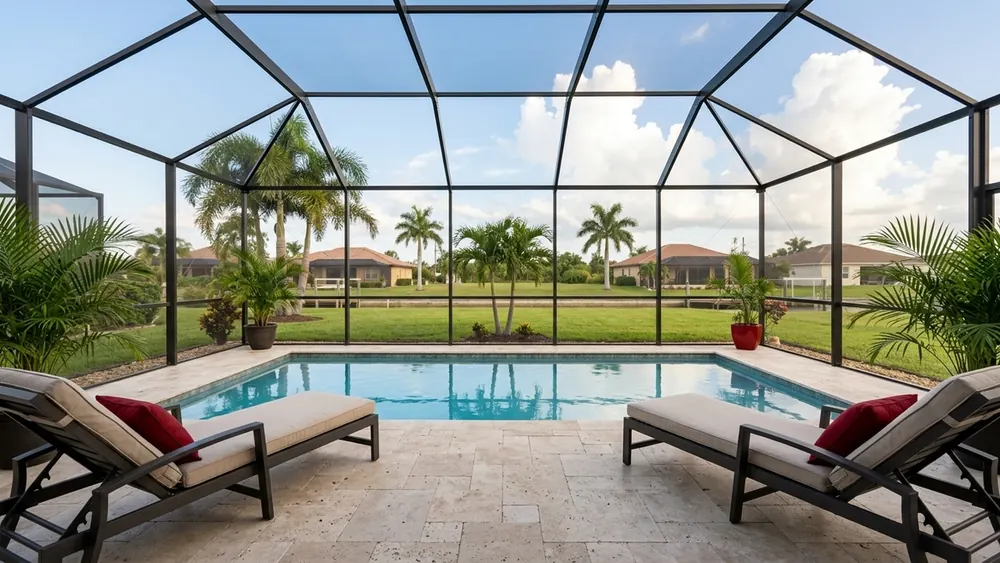
A pool makes sense for your Cape Coral retirement home if you’ll use it often and are ready for its upkeep, insurance questions, and equipment care. Decide how you’ll live in the house first, then check the pool itself closely.
On this page
The honest answer depends on how you’ll live
Your Cape Coral retirement home should have a pool if you’ll actually use it and you’re ready for what comes with it: regular care, equipment that wears out, an enclosure to look after, and questions for a licensed insurance agent. If you picture yourself in the water most days, a pool can be a big part of why the house works. If you’re not sure, it’s worth thinking it through before it becomes the reason you pick a house.
A photo of a screened pool and lanai on a Cape Coral listing is easy to fall for when you’re scrolling from up north. But a pool is a physical system, not a backdrop. It has a pump, a filter, a surface, and often a heater and a screen enclosure, and each of those has an age and a condition. The question isn’t whether pools are nice. It’s whether this pool fits the life you’re planning.
This decision matters early because it narrows your search in a big way. Deciding pool or no pool before you shortlist homes keeps you from comparing houses that don’t really belong in the same pile. It also means the insurance and inspection questions get asked on time, while you can still walk away, instead of after you’ve already fallen for the backyard.
How you plan to use the home changes things
Start with how you’ll live in the home. Picture an ordinary week, not a vacation. Will you swim most mornings, cool off in the afternoon, or mostly sit beside the water? Will you have guests visiting from up north who expect a pool? Honest answers here tell you whether a pool is a must-have, a nice extra, or something you’d be paying to maintain without using much.
Full-time or seasonal use matters just as much. If you’ll be in Cape Coral all year, you’re around to keep an eye on the water and the equipment. If you’ll be up north for part of the year, someone has to care for the pool while you’re gone, and that becomes a standing arrangement and a standing cost. Plan for that before you buy, not after the first time you leave.
Think about the longer run too. A pool you enjoy caring for now is a pool you’ll keep caring for later, and some people would rather spend less time on upkeep as the years go by. A single-story home with a smaller pool, or no pool at all, can be a deliberate choice. Neither path is wrong. It’s about matching the house to the routine you actually want.
What a pool adds to the work and the cost
A pool brings regular care: keeping the water balanced, cleaning the surface and filter, and watching the equipment. Some owners do it themselves and enjoy it. Others hire a pool service. Either way, it’s an ongoing part of owning the home, and it’s worth asking the seller or listing agent how the pool has been cared for and by whom, so you know what you’re stepping into and can plan your own routine around it.
The equipment wears out over time. Pumps, filters, heaters, and surfaces all have a working life, and their age matters when you’re weighing a price. So does the screen enclosure, which takes a beating from sun and weather. You don’t need to know repair costs off the top of your head. You need to know the age and condition of each part, so a licensed home inspector and your own budget can do the rest.
Then there’s insurance. A pool, an enclosure, and the structures around them can affect coverage, and that’s a question for a licensed insurance agent before you settle on an offer. Coverage depends on the specific property and it changes over time, so get input on the actual house you’re considering. In Cape Coral, checking the insurance first is one of the steps that saves the most surprises later.
What to check on any pool home
If you decide a pool belongs on your list, look at each pool home as closely as you’d look at the roof. A clean pool in a listing photo tells you very little about the equipment behind it or the enclosure over it. Walk the deck, look at the screen, find the equipment pad, and write down what you see. These are the things to check on every pool home you tour.
- The age and condition of the pump, filter, heater, and other equipment
- The condition of the pool surface, tile, and deck around the water
- The state of the screen enclosure, its frame, and any torn panels
- Records of past repairs, replacements, and permits for pool or enclosure work
Bring that list to your inspection. A licensed home inspector can assess condition, and the City of Cape Coral holds permit records for past work, so you’re not relying on memory or a guess. If something looks off, ask about it in writing before the inspection period ends. A short list of questions now is far easier than a surprise repair after you’ve moved in.
Who to ask about each pool question
Pool questions belong with different people, and keeping them straight saves you from relying on a neighbor’s story or something read online. Some answers come from the seller’s records, some from professionals who look at the home in person, and some from official offices. Here’s a simple way to keep track of who answers what before you decide on a pool home.
| Question | Why it matters | Who to ask |
|---|---|---|
| How does the pool affect coverage | It can change what the home really costs | A licensed insurance agent |
| What shape is the equipment in | Worn parts can mean near-term repairs | A licensed home inspector |
| Was past pool work permitted | Unpermitted work can raise questions later | The City of Cape Coral |
| How has the pool been cared for | Care history hints at future upkeep | The seller or listing agent |
| Does the pool fit my budget | Upkeep is an ongoing cost of ownership | Your lender and your own plan |
Write down who answered each question and when. Coverage and rules change, so an answer from early in your search may need checking again before you commit. When you have all the answers side by side, the decision about a particular pool home usually gets much clearer, and you can compare it fairly against homes without one.
Assumptions that lead to pool surprises
One common surprise is assuming a pool that looks clean is in good shape. The water can sparkle while the pump is tired or the enclosure needs work. Another is assuming the upkeep will be easy because it looked easy on a visit. A pool that someone else has been caring for every week may need more of your time, or a service, than you expected.
A third surprise is forgetting about the months you’re away. If you’ll split the year between Cape Coral and up north, a pool doesn’t pause while you’re gone. Someone has to check the water and the equipment. The fix for all three is the same: ask about condition, care, and coverage early, and plan your upkeep before you sign, not after.
Before you start touring pool homes
Before you tour pool homes, get clear on how you’ll use one and who will look after it. You don’t need every answer worked out, just enough to know whether a pool is a must-have, a maybe, or a pass. That alone will shape which Cape Coral homes are worth a visit. Write these down and bring them along.
- How often you picture yourself using a pool in an ordinary week
- Whether you’ll live in Cape Coral full-time or part of the year
- Who will care for the pool, and how much upkeep you want
- Your questions for a licensed insurance agent and a home inspector
With those notes in hand, a pool becomes one clear choice instead of a photo you fell for. Julie lives in Cape Coral, has built and remodeled homes, and pays close attention to the physical side of a house, from the equipment pad to the screen. Bring your list and talk it through, with no pressure. Is a pool a must-have for you, or still a maybe?
This article is general information about buying and selling property in Cape Coral and Lee County, Florida. It is not legal, tax, insurance, lending, valuation or inspection advice and does not predict prices or promise results. Confirm insurance with a licensed insurance agent, water routes, docks, seawalls and permits with the City of Cape Coral and a marine professional, condition with a licensed inspector, homestead and taxes with the Lee County Property Appraiser and Tax Collector, and financing with a lender. Julie Kubic, Starlink Realty, Inc.

Written by