Waterfront Homes
What does gulf access mean on a Cape Coral listing?
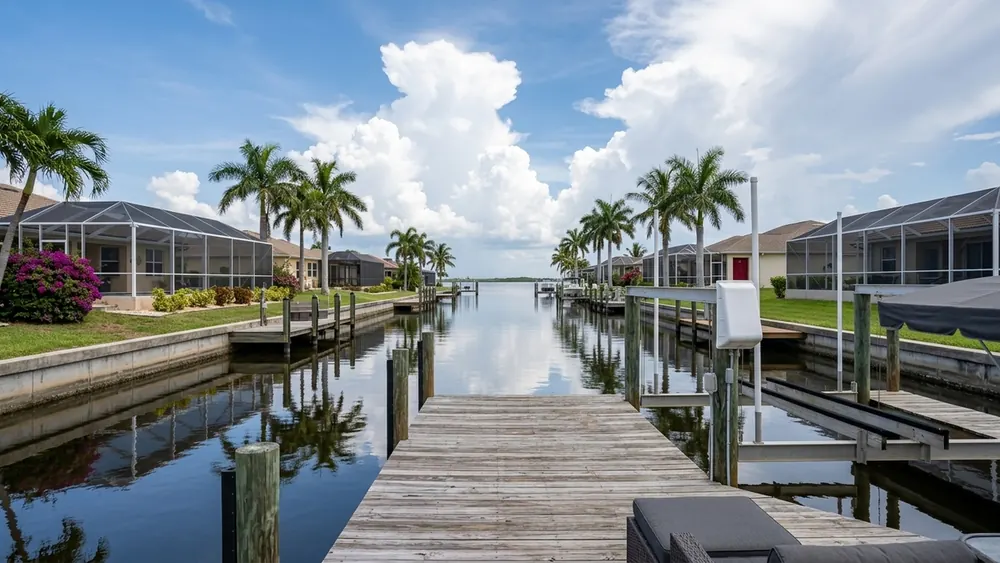
The short answer
On a Cape Coral listing, gulf access usually means the canal behind the home connects by a water route to open water. It is a description, not a guarantee, so verify the route, any bridges, and the dock and seawall for each property.
On this page
The plain answer on gulf access
On a Cape Coral listing, gulf access usually means the canal behind the home connects, by a water route, to open water. That is the whole promise of the phrase. It does not tell you how long the trip takes, what sits along the route, what size boat fits, or what shape the dock and seawall are in. Treat it as a starting point for questions, not as an answer. The listing describes the water. You still have to check it.
Here is why it matters. In Cape Coral, the water is often a large part of what you are paying for. Two homes can look alike from the street and be very different once you follow the canal out back. One route may suit the boat you own today, and another may not. If you skip the water questions because the listing already said gulf access, you are trusting a few words to carry a big decision.
A house on the water is really two decisions: the house, and the water. This article walks through the second one. It explains the common listing terms in plain English, lays out what to check and in what order, and names who gives the official answer for each piece. It gives no canal depths, bridge clearances, travel times or insurance figures, because those vary by property and change over time.
How the common waterfront terms compare
Cape Coral listings use a handful of water terms, and they are not interchangeable. Gulf access usually means a canal route to open water. Direct access usually means a route without fixed bridges, which matters if your boat has a mast. Other listings simply say waterfront or canal front, which may describe water behind the home without promising a route anywhere. Read each term as a question you still need to answer.
- Gulf access: usually a canal route to open water, with the actual route still to confirm
- Direct access: usually a route without fixed bridges, worth checking against your own boat
- Waterfront or canal front: water behind the home, with any route to open water still unstated
- Lake or freshwater frontage: water at the back of the lot, with boating use to ask about directly
Questions to ask before you fall for it
Before you get attached to a house on the water, work through these questions in order. The order matters. There is no point negotiating over a kitchen if the route does not work for your boat, or if the insurance conversation changes the numbers. Write the answers down as you get them, along with who gave each one and when, so you can compare homes on the same footing.
- What route does this canal take to open water, and what sits along the way
- Are there bridges or other restrictions on that route for the boat you own
- How old is the seawall, and is there any record of recent repairs
- What condition are the dock and any boat lift in, and were permits pulled
- How does being on the water change the insurance conversation for this home
Who gives the official answer on water
You can form these questions yourself and keep them in the right order, but the official answers come from other people. The City of Cape Coral is the place to ask about routes, docks, seawalls and permit records. A marine professional or marine contractor can look at the actual condition of a seawall, dock or lift. A surveyor can confirm what is on the lot and where. Each one answers a different part of the picture.
Insurance belongs in this conversation early. Talk with a licensed insurance agent before you settle on an offer, and share the property’s details so the agent can tell you what affects coverage. Being on the water can change that conversation, and the answer can change what the home really costs you to own. This article names no premiums or carriers, because they vary by home and change often. Ask about flood coverage directly and check official flood maps.
A licensed home inspector covers the house itself, and you will want one regardless of the water. Ask whether the inspector looks at the dock and seawall, or whether you need a separate review by a marine professional for those. Keep a simple list of who answered which question and on what date. When you compare two waterfront homes later, that list keeps you from mixing up what you were told about each one.
Why the listing words are only a start
Listing descriptions are written to market a home, and they often reuse the same handful of words. Gulf access on one listing and gulf access on another can describe routes that feel very different once you are out on the water. A listing may also be older than the last change to the dock, the lift or the rules for the route. The words are honest shorthand. They are not a survey, an inspection or a permit record.
That is why the order of operations matters so much here. A buyer who checks the route, the seawall and the insurance first can make an offer with clear eyes. A buyer who checks them after the offer is often working under time pressure, or finding out late that the boat they own does not fit. The homework is the same either way. Doing it first just puts you in a calmer position to decide.
I tell people to check the insurance, the water route and the seawall before we talk about an offer. The listing tells you what to ask, not what you will find.
How your boat and plans change things
The right questions depend on how you plan to use the water. If you own a boat now, start with its size and what it needs from a route, and test each listing against that. If you might buy a boat later, think about the range of boats you could see yourself owning. If you never plan to boat at all, the route may matter less to you, but the seawall and the insurance still matter a great deal.
Seasonal plans change things too. If you will spend part of the year away, ask who will check on the dock, the lift and the seawall while you are gone, and what upkeep the water side of the property needs over time. A pool home on the water adds another layer of condition and upkeep to look at. None of this is a reason to avoid the water. It is a reason to know what you are signing up for.
What to gather before your first conversation
Before you sit down to talk about waterfront homes in Cape Coral, write a few things down. Note the boat you own or hope to own, with its size and whether it has a mast. Note whether you plan to live here full-time or part of the year. Note your budget, and leave room in it for insurance and for upkeep on the water side. If you already have listings saved, bring them so you can test each one against the same questions.
Julie has helped a buyer purchase a gulf-access pool home in SE Cape Coral. Whatever home you are looking at, the same homework applies: the route, the seawall, the dock, the insurance and the house, checked in that order. You do not need every answer before a first conversation. You just need the questions written down, and a willingness to verify each one with the right source before the offer goes in.
If you are weighing a home on the water and the listing says gulf access, bring that listing and your boat details to Julie, and start with the questions above. You can sort out together what to verify first, who to call for each answer, and what to ask before an offer goes in. Here is a good place to begin: what boat do you own, or hope to own, and what does it need from the route behind the house?
This article is general information about buying and selling property in Cape Coral and Lee County, Florida. It is not legal, tax, insurance, lending, valuation or inspection advice and does not predict prices or promise results. Confirm insurance with a licensed insurance agent, water routes, docks, seawalls and permits with the City of Cape Coral and a marine professional, condition with a licensed inspector, homestead and taxes with the Lee County Property Appraiser and Tax Collector, and financing with a lender. Julie Kubic, Starlink Realty, Inc.

Written by